
Spain: Parachute Payments
In the Spanish second tier parachute payments are smaller than in England leading to a more unpredictable and exciting second tier with sides in a constant state of flux.

At the end of matchday 29 we have a historic and yet refreshing top half of the table in LaLiga Hypermotion, Spain’s second division. The top 12 is full of historic sides like Racing Santander, Castellon, Malaga, Depor, Sporting Gijon and Las Palmas and yet just three of the top twelve have played in La Liga in the last five years.
Meanwhile in the bottom eight, five have played in Segunda in the last five years and four have played in the top flight in the last two years. While some of this is no doubt down to bad choices and poor management another factor is the fact parachute payments in Spain aren’t as big a factor and the complex array of factors that decide the payment a club gets means budgets are more evenly spread across the division.
In England clubs relegated get 55% of the equal shares which is basically the TV money the Premier League generates in year one, 45% in year two and 20% in year three albeit year three is only for clubs who have spent more than one consecutive year in the Premier League this can amount to around £100 million pounds for relegated clubs who spend three seasons out the top flight.
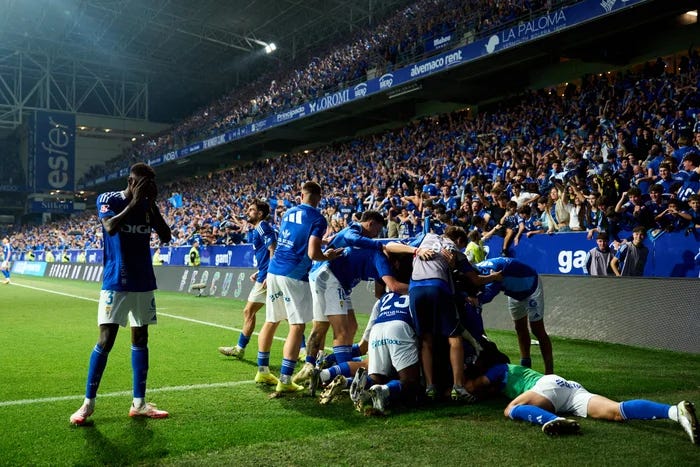
In Spain the parachute payment is known as the ayuda al descenso “relegation aid” it is still there to soften the blow but it doesn’t distort the league in terms of financial impact. The payment is based on three factors, TV revenue, historical tenure so how long the club has been in LaLiga and social impact this is a smaller variable but considers factors such as ticket sales and the clubs historical status.
For me the key difference is the parachute payment in England is used as a trampoline to bounce back whereas in Spain it’s used as a transition to life outside of the top league and to allow clubs to gradually move towards a more sustainable budget.
In money terms and as we don’t yet have this year’s accounts I will look at the clubs who went down in 23/24, Cadiz who will get the most out of the three relegated sides can expect to receive €22.6 million in relegation aid most of which is paid in year one but spread over three years while Sheffield United got £55 million in parachute payments just for their first season outside the Premier League in which they reached the play-off final while Cadiz finished 13th.
Granada who had come instantly back down got just €9 million in the first year compared to Cadiz €13.8 million as they hadn’t accumulated historical revenue while Almeria got €10.4 million.
The squad cost limits also play their part in terms of restricting what clubs do in Spain once relegated although they are limited for clubs who are already spending more than the limit.
Almeria for instance came down last season with one of the biggest wage budgets Segunda has seen, the club had spent decent money to compete in LaLiga, their budget in 2023/24 was €66 million the 11th biggest budget in the division yet finished rock bottom.
For the 24/25 season in Segunda their budget was €3.5 million, considering the club had a keeper who cost €8 million from Lazio, Marc Pubill who ended up leaving for Atleti and Luis Suarez who scored 27 goals and earned a move to Champions League club Sporting it’s clear they were spending far more than that figure.
Almeria gambled like how clubs in England gamble and spent the parachute payments on trying to ensure they go up but a dysfunctional squad ended up going out in the play-off semi finals. Whereas in England the gamble is often to spend, in Spain the gamble is to keep the squad together.
This summer they cut costs selling several players and their budget remained at around €3.3 million although for the winter window it shot up to €10 million after the sales.
Eibar a club who despite being one of the smallest clubs ever in the top flight got one of the biggest totals at almost €30 million in comparison to fellow relegated side Huesca who got €10 million. The difference being Eibar had spent seven consecutive seasons I the top flight while Huesca had yo-yod.
That allowed Eibar to have a healthy budget but at the end of their three year payments a number of key players were sold to balance the books and make them more sustainable.
What is striking is despite the wealth of the recently relegated clubs in England the Championship this season is in many ways a similar story to Segunda. The relegated three last season of Ipswich, Leicester and Southampton only Ipswich find themselves in the top six, Southampton are 8th and very much in the battle for promotion while Leicester who are institutionally a mess and have suffered a points deduction find themselves 22nd.
It feels almost an anomaly in England to not have relegated clubs in the mix whereas in Spain it’s starting to feel a trend. One of the first areas for the newly appointed football regulator in England will be reviewing parachute payments with EFL clubs arguing they can’t compete.
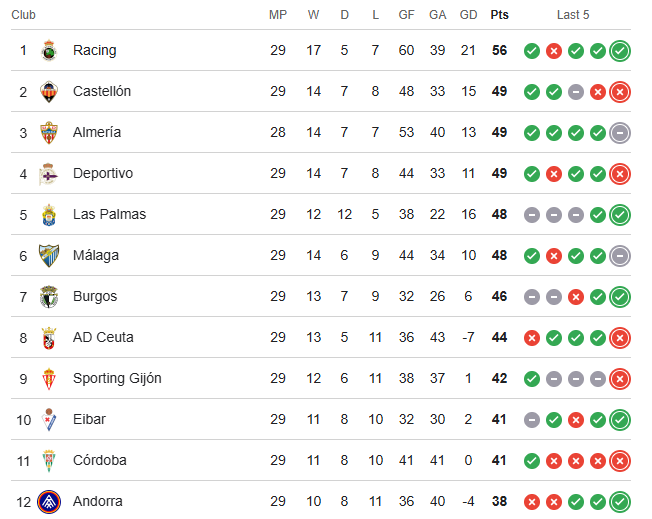
In Segunda of the three sides who came down only Las Palmas are in the promotion battle currently sitting 5th, Leganes a well-run club but who made the cardinal sin of appointing Paco Lopez find themselves 17th and Real Valladolid 18th.
None of the three relegated sides from the previous season went up in Segunda last season and this season Granada who have been in the bottom four for most of the season sit 15th and Cadiz who also made the cardinal sin of appointing Paco Lopez the season before sit 16th.
Only Almeria have been in regular play-off contention for their two seasons and they currently sit 3rd and could go second with a win on Monday night at home to bottom four side Cultural Leonesa.
Of the current top six in Segunda, three of them found themselves in the third tier two seasons ago, granted they’re historic clubs in Castellon, Depor and Malaga but what it shows you is this is no closed league and clubs can enter the season with prospects both to go up and down.
What’s most striking about Segunda is the lack of disparity financially in terms of salary control across the league, while Granada and Almeria technically had the smallest budget controls of the league if we exclude them as they’re spending more than they’re allowed. Ceuta have the smallest budget at €6.9 million while the biggest budget is Leganes after the sale of Yan Diomande at €19 million.
It might be €13 million in difference, but the margin of error is smaller, one or two bad signings or the hiring of the wrong coach can be huge for clubs when the gap is so small. In the Championship Leicester’s estimated wage bill is £42 million with Southampton and Sheffield United not far behind while Sheffield Wednesday who are in administration is thought to be £11.7 million.
While Leicester fans will be rightly angry that the wage bill isn’t translating to on the pitch generally those big differences have an impact on the league table. Last season two of those promoted had been relegated in the past two seasons, the season before two of the clubs promoted had been relegated the season before.
In Segunda only one of the three promoted clubs had been in the top flight in the last two seasons and Real Oviedo had gone 25 years without playing in LaLiga.
The side they beat in the play-off final Mirandes had never played in LaLiga and smart recruitment led them to nearly achieving a miracle of biblical proportions, this season Mirandes sit bottom having hired two coaches with no Segunda experience and the loan market they so heavily depend on not working out.
Some might say it’s a race to the bottom in Spain and that quality is lacking, in some ways it’s a fair challenge, of the three promoted clubs last season Elche sit highest in LaLiga in 17th although at times in the early part of the season fans and pundits were openly discussing them as European challengers.
Real Oviedo who came up have been woefully short although plenty of that can be put down to the running of the club and the mistakes they made in terms of coaches and recruitment. Levante have threatened to break out of the relegation zone for most of the season but just lack that crucial bit to get matches over the line.
The flip side is to see a second division where Racing Santander are top with Castellon, Depor, Las Palmas and Malaga all chasing them is exciting and catching the eyes of an international audience who love stories and historic clubs doing well.
A LaLiga with Racing Santander, Depor, Malaga and a Castellon would bring a lot of attention and strengthen the product especially in the context of the retro week and everyone’s love of nostalgia.
While the financial limits LaLiga puts in isn’t to the taste of everyone and particularly those who are restricted from spending there is no doubt we are seeing the benefits of it in the Spanish second tier.
In Segunda there is no real equivalent of Bristol City or Preston clubs who perennially finish between 10th and 13th, those two sides and QPR have spent eleven consecutive seasons in the second tier.
In Seguna Real Zaragoza hold the record currently at thirteen but sit six points adrift of safety, next after them is Sporting on just nine then Huesca on five the league is in a constant state of flux which provides both excitement and fear.