
5 Shock Promotions

Following last week’s gloomy post on shock relegations this week’s will strike a cheerier tone with five of the most shock promotions in Spanish football over the years.
Eibar The Brave

Anyone who has visited the small Basque town of Eibar situated between Bilbao and San Sebastian will understand how big a feat it was for this sleepy town to host a La Liga club.
Eibar had been a solid Segunda team but never a team seen as likely to be promoted however they were relegated in 2009 to the third tier where they spent four years trying to get out of the well. Once they gained promotion to Segunda they then went back to back and won Segunda in one of the most surprising promotions in Spanish football history.
Their shock promotion not only caught football fans by surprise when it came in 2014 but the club itself who not only were given their confetti to celebrate by a Barcelona side who had been expecting it for their own celebrations but missed out on the La Liga title but they had to do a global fundraiser to bring in the capital needed to go up to La Liga.
The club was threatened with relegation to the third tier on gaining promotion for the first time in their history as despite having no debt they didn’t have sufficient capital. Fans of football round the world though rallied to ensure the fairytale of Eibar had a happy ending.
Ipurua their home stadium was a million miles away from the likes of the Bernabau and the Nou Camp and it looked ahead of the season like it might not be allowed as a Primera ground. They did get it ready in time and got the capacity up to around 7000. The official capacity is given as just over 8,100 but the record attendance is below that and anyone who has had the privelege of visiting Ipurua will know just how boxed in the stadium is.
The Basque side were massively odds on for relegation and were relegated but the financial situation at Elche saved them and they went on to have seven seasons in Segunda before relegation in 20/21. They became known for their high pressing and direct football with players such as Marc Cucurella making their name at the club before moving on to bigger and better things.
While people became accustomed to the Basque side being in La Liga it shouldn't be underestimated that a town of just 27,000 people was able to sustain La Liga football and welcome Messi and Ronaldo.
Leganes

in 2015/16 Leganes a small side from a satellite town in South Madrid achieved an historic first promotion to La Liga.
Los Peperinos only made the second tier for the first time in their history in 93/94 and while they had a good run in Segunda they spent ten years in the regionalised third tier from 2004 till 2014.
Having consolidated with a surprise 10th place finish on their return to Segunda they went and clinched a top two spot. Again their rise was under a coach called Garitano this one Asier who had guided them to two promotions in three seasons.
A squad mainly made up of journeymen players from the Spanish lower leagues managed to guide them into the top two. The league that year was wide open with Alaves eventually clinching the title by a point in one of the weaker editions of Segunda.
Lega though did have four years in La Liga after promotion with constant relegation dogfights a theme of their stay.
While they are of similar size to Eibar Butarque their home ground is bigger with a capacity of 13,000. Similar to Eibar they caught the imagination of the wider football audience and have plenty of social media following mainly due to their mascot a massive cucumber called Super Pepino.
The fairytale ended in 2020 and despite almost bouncing back at the first attempt they then had two seasons of struggle in the second tier before another unexpected promotion last season.
Under the ownership of Jeff Luhnow a innovative Baseball executive the club now looks to have a bright future and while financially and stature wise they will never be a big boy of La Liga but they will be competitive.
Girona
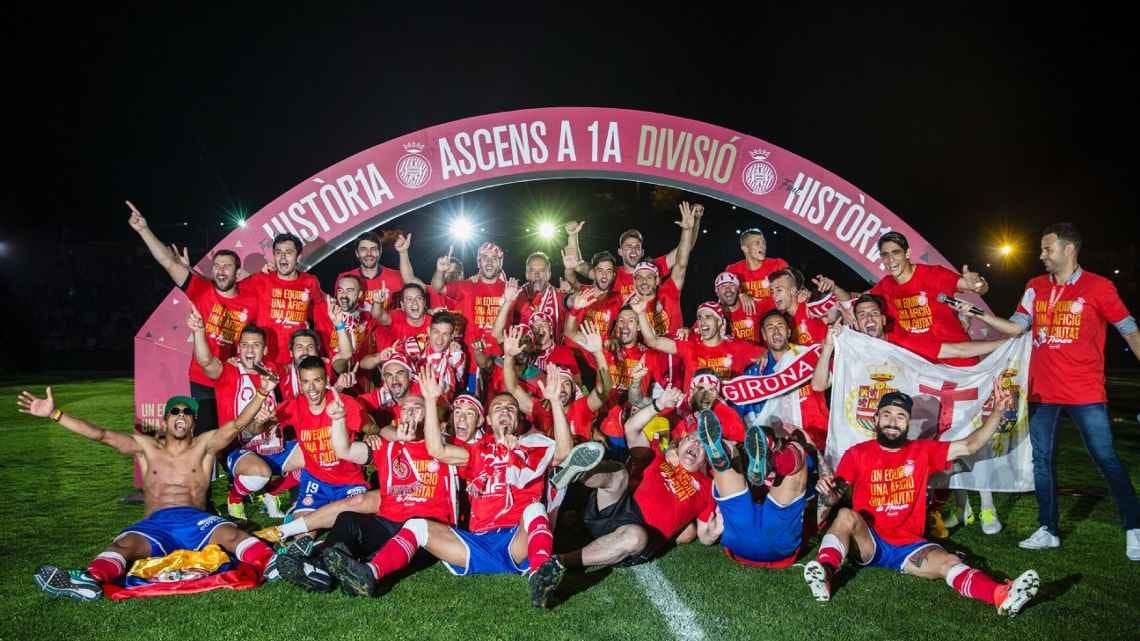
The Catalan side may get sneers from those who see the link to Man City but their promotion to La Liga was still a shock.
In Spain clubs aren't able to spend what they want. La Liga has strict salary controls related to income for the top two divisions to encourage sustainability and ensure an owner can't spend his way to the top.
While some will say this creates a monopoly people just need to look at the amount of Spanish clubs who went bankrupt prior to the rules changing.
The Catalan side had spent over 40 seasons of their history in regional football before establishing themselves in Segunda in the 2010s.
Girona had been pushing for promotion for a number of seasons before finally reaching the promised land at the end of the 16/17 season.
That promotion secured investment from the City Football Group and Pere Guardiola brother and agent of Pep.
The Catalan side amazingly finished 10th in their first La Liga side with sides struggling to cope with their 3-5-2 formation under Pablo Machin. After four successful seasons Machin left and while he hasn't gone on to any great success since, Girona were relegated the following season.
Three seasons of play-off heartache followed before finally securing a return to La Liga under Michel.
To the astonishment of many they ended last season in the Champions League places and at one point looked serious contenders for the title.
Amorebieta
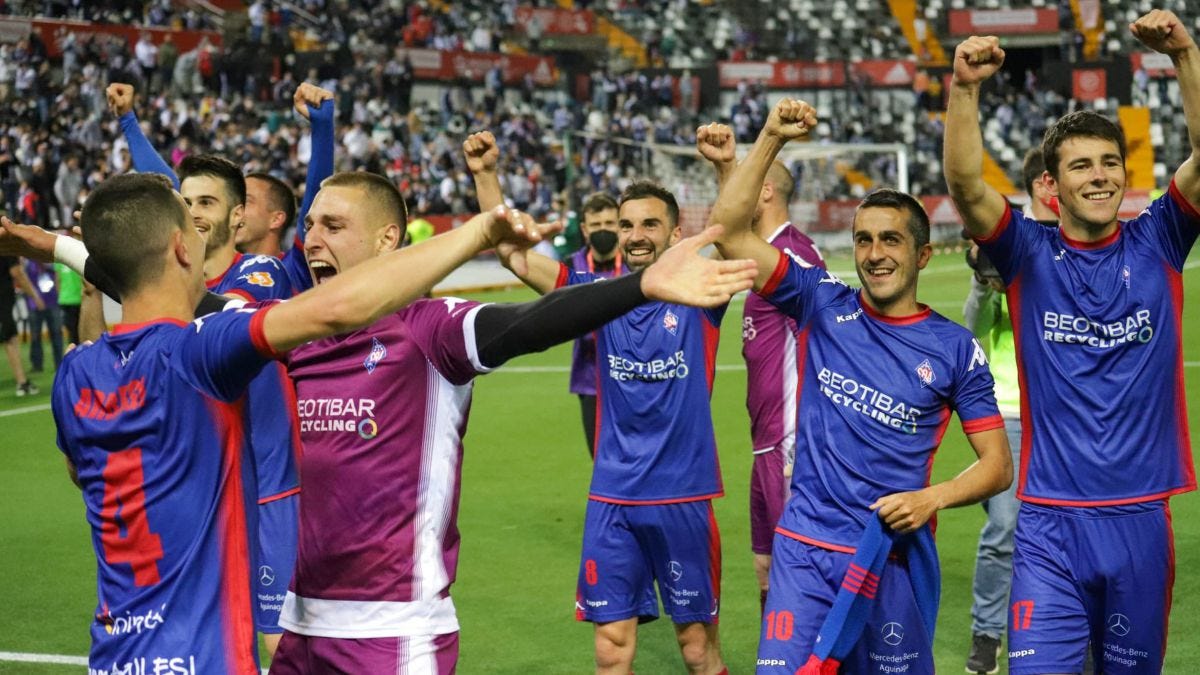
This shock promotion isn't to La Liga but to Segunda. The Basque side had spent most of their history in the fourth tier of Spanish football and their aspirations looked to be to become a third tier side at best.
After a solid run in the third tier where they had been a midtable side they amazingly finished third to make it into the lottery of the play-offs.
Having beaten Linares in the first round of the play-offs they faced a tricky task against a Badajoz side who had lost just twice all season. Having finished lower in the regular season Amorebieta would also be away in the one off tie.
The Basque side defied the odds to secure a 0-1 victory and an unlikely promotion to the second tier. That promotion though came with problems with their home stadium of Urritxe nowhere near the standard of a second tier ground. With minimal time or space to turn Urritxe around they effectively lost home advantage in the second tier as they moved to Athletic Clubs training ground stadium Lezama 2.
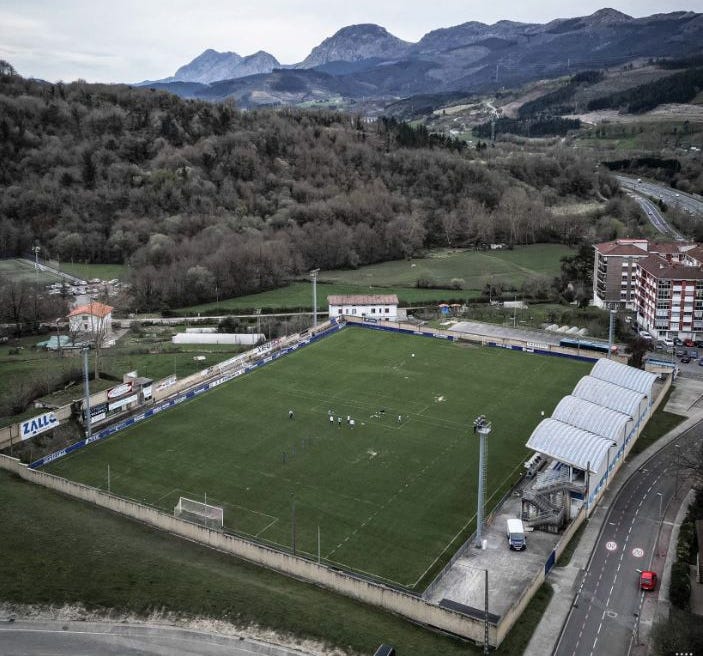
(Photo from EspanaEstadios)
Amorebieta gave it a good go in their debut season in the second tier and had Gorka Guruzeta in their ranks as they battled to survive. While they ultimately went down Guruzeta did score 13 goals and earned himself a return to former club Athletic Club.
The Basque side though back at Urritxe in Primera RFEF again mounted a promotion challenge and gained promotion in 22/23 before another season in the relegation battle was ended on the final day in a winner takes all clash against Mirandes.
Xerez CD

While Andalucia has provided plenty of clubs in the top tier Xerez CD from the city of Jerez de la Frontera were never one of those clubs that was until an unlikely promotion in 2009.
While most of Xerez history had been spent in the third tier they had established themselves as second tier club in the 2000s. They had almost gone down though in 2008 in a disappointing campaign.
Heading into the 08/09 season and many expected giants Real Zaragoza to romp the league or Real Sociedad the Basque outfit the next stand out candidates. With sides such as Hercules, Levante and Las Palmas expected to challenge it looked a competitive edition of Segunda.
Not many would have had Xerez on their list to go up but the side defied all expectations to clinch Segunda by a point from Real Zaragoza. Xerez had a bit of star quality in the shape of winger Momo who got 17 goals from midfield that season.
Esteban Vigo the Head Coach who masterminded their shock promotion must have seen the writing on the wall when it came to La Liga as he immediately left for Hercules following promotion.
With an inexperienced Head Coach in Cuco Ziganda and a limited squad and minimal budget unsurprisingly they struggled badly in La Liga and were relegated finishing bottom albeit just three points from safety.
That season was as good as it got for Xerez who soon plummeted through the leagues eventually reaching the fifth tier of Spanish football before stabilising and now find themselves in the fourth tier.